How to Choose the Right Winery Equipment – Balancing Quality and Cost-Effectiveness
admin
April 17th, 2026
No Comments
This guide shows you how to select winery equipment that delivers long-term performance without overspending. You’ll learn to identify dangerous compromises in material and design, prioritize features that impact wine quality, and make choices that offer real value over time. Your decisions directly affect consistency, safety, and profitability.
Key Takeaways:
Assess your production scale and winemaking style before investing in equipment-smaller operations benefit from versatile, compact systems, while larger facilities need durable, high-capacity units that match their output.
Compare total cost of ownership, not just upfront price-factor in maintenance, energy use, longevity, and potential downtime to identify which equipment delivers real value over time.
Seek equipment with strong manufacturer support and proven reliability in real-world wineries-user reviews, peer recommendations, and service availability often matter more than advanced features with limited practical benefit.
Assessing Production Scale and Capacity Factors
Understanding your production scale ensures equipment aligns with your winery’s goals. Consider annual throughput, batch size, and facility constraints before investing. Matching capacity to demand prevents overbuying or bottlenecks. The right balance supports growth without excess cost.
Annual production volume dictates equipment size and automation level
Batch size influences fermenter and press selection
Future expansion plans should inform scalability needs
Space limitations impact layout and equipment footprint
Utility capacity must support energy, water, and drainage demands
Determining annual throughput and batch size requirements
You must define your annual throughput to select appropriately sized fermentation tanks and bottling lines. Small batches demand flexible systems, while high volume favors automation. Matching equipment to your batch size prevents inefficiencies. The accuracy of these estimates shapes your operational success.
Evaluating facility layout and utility compatibility
Your winery’s physical space and utility systems determine what equipment can function safely and efficiently. Confirm ceiling height, floor load capacity, and access points align with machinery needs. The compatibility of plumbing, electrical, and ventilation systems prevents costly retrofits.
Space constraints and utility limitations can derail even the best-designed systems. You need to verify that drainage slopes support transfer lines, electrical panels deliver sufficient power, and ventilation handles CO₂ during fermentation. Installing equipment without assessing these factors risks safety hazards and operational downtime. The long-term reliability of your winery depends on this foundational alignment.
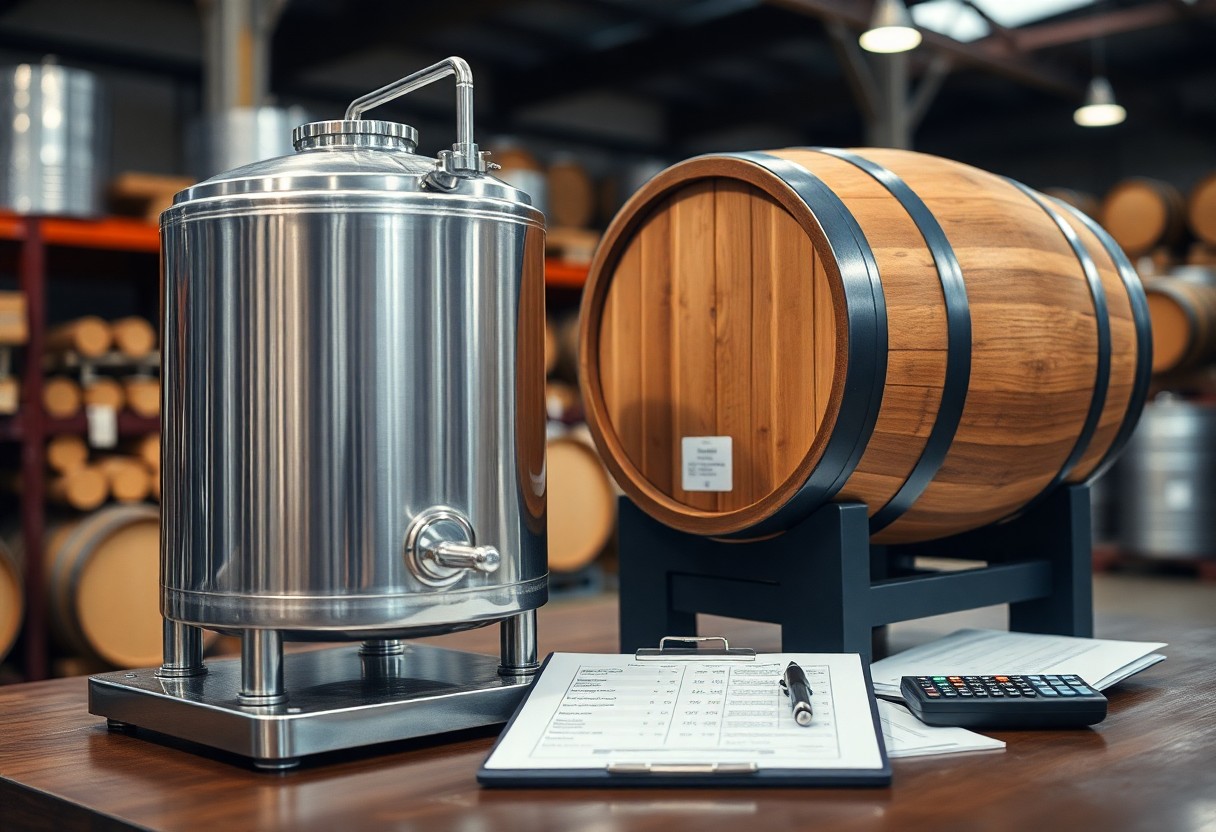
Choosing the right fermentation vessel impacts every batch you produce. Focus on materials that support your wine’s style and aging goals. Durability, temperature stability, and ease of cleaning determine long-term value. Match vessel type to your production volume and varietal profile for consistent, high-quality results.
Comparing stainless steel, concrete, and oak for durability
Each material offers distinct longevity and maintenance needs. Stainless steel resists corrosion and lasts decades with minimal upkeep. Concrete provides excellent thermal mass but may require resealing. Oak imparts flavor but wears faster and demands careful sanitation.
Material
Durability & Maintenance
Stainless Steel
Highly durable, resistant to rust and microbes; low maintenance
Concrete
Long-lasting with proper sealing; prone to cracking if not insulated
Oak
Limited lifespan (5-8 years); requires regular hydration and cleaning
Prioritizing advanced temperature control and sanitation features
Temperature precision prevents stuck fermentations and preserves aromatic complexity. Vessels with integrated cooling jackets and digital monitoring give you real-time control. Sanitation-friendly designs with smooth interiors and CIP (clean-in-place) compatibility reduce contamination risks and labor costs over time.
Look for vessels with full jacket coverage for even cooling
Choose rounded corners and minimal crevices to prevent microbial buildup
Opt for digital probes with remote access for 24/7 monitoring
Confirm compatibility with your facility’s cleaning agents and water pressure
Feature
Benefit to Your Winery
Full cooling jacket
Prevents hot spots and ensures uniform fermentation
CIP system compatibility
Reduces manual labor and human error during sanitation
Smooth, polished interior
Minimizes bacterial adhesion and simplifies cleaning
Remote temperature monitoring
Enables quick response to fluctuations, even off-site
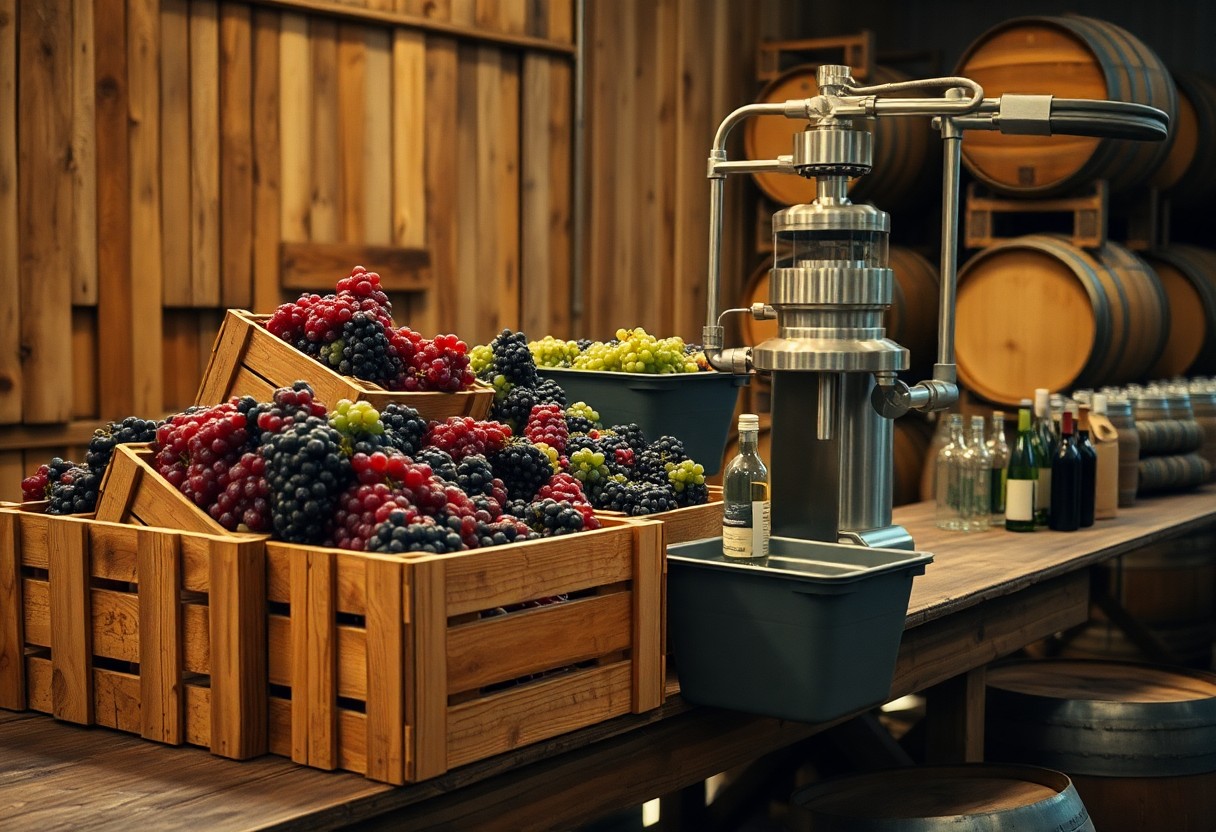
Critical Factors for Grape Processing Machinery
Assess throughput capacity to match your harvest volume
Prioritize material durability using food-grade stainless steel
Ensure ease of cleaning to prevent microbial contamination
Evaluate energy efficiency for long-term cost savings
Assume that choosing the right configuration directly impacts wine quality and operational efficiency.
Choosing destemmers and crushers for optimal fruit integrity
You protect berry quality by selecting a destemmer that minimizes skin rupture and seed crushing. Gentle rotation speed and proper cage sizing preserve varietal character. Assume that over-processing leads to harsh tannins and oxidation risks.
Selecting press technology for efficient juice extraction
You control extraction intensity with the right press type-pneumatic, basket, or membrane. Pressure modulation safeguards phenolic balance, especially for white and rosé wines. Assume that excessive force increases bitterness and haze-forming compounds.
Modern press systems offer programmable cycles that adapt to grape variety and ripeness. You gain consistency by monitoring juice flow and pressure in real time, reducing labor and maximizing yield without sacrificing quality. Newer models integrate seamlessly with automation platforms, enhancing precision while lowering operational strain over time.
Tips for Balancing Capital Investment and Long-Term Value
Smart purchasing means weighing upfront cost against lasting performance. Focus on equipment with strong durability, proven energy efficiency, and low maintenance demands. Prioritize brands known for reliability and service support. Recognizing long-term value helps avoid costly replacements down the line.
Assess total cost of ownership, not just purchase price
Choose modular systems for future scalability
Verify warranty terms and service availability
Invest in energy-efficient models to reduce utility bills
Select equipment with documented reliability
Analyzing energy efficiency and maintenance overhead
Energy use directly impacts your operating budget. Equipment with low power consumption and heat recovery systems cuts monthly costs. Machines requiring frequent servicing increase labor and downtime. Recognizing these patterns helps you choose systems that run longer with fewer interruptions.
Identifying high-ROI automation for labor reduction
Automation can slash labor hours without sacrificing quality. Look for bottling lines, crush systems, or CIP units that reduce manual tasks. Systems that pay for themselves in under three years offer strong returns. Recognizing which processes drain staff time reveals where automation adds the most value.
When evaluating automation, focus on tasks that are repetitive, time-intensive, or prone to human error. A fully automated filtration system, for example, ensures consistency while freeing up skilled workers for higher-value duties. Even mid-range systems can deliver measurable savings in labor and product waste, especially during peak production. The best choices integrate smoothly with your current workflow and scale with demand.
How-to Evaluate Supplier Reliability and Support
Choosing a supplier means trusting them with your production flow and long-term success. Look beyond price and examine their track record-consistent delivery, responsive communication, and proven experience in the winemaking industry speak volumes. A reliable partner stands by their equipment and offers real support when issues arise, minimizing costly downtime.
Verifying technical assistance and spare parts availability
You need help fast when machinery fails. Confirm that the supplier provides 24/7 technical support and keeps spare parts in stock locally. Delays in repairs can halt production, so ensure response times are guaranteed in writing. Ask other wineries about their real-world experiences with service speed and part replacements.
Negotiating comprehensive warranties and service contracts
Secure warranties that cover both parts and labor for at least two years. Push for service contracts that include routine maintenance visits and emergency callouts. A strong agreement reduces unexpected costs and ensures your equipment runs efficiently. Never accept vague terms-every detail should be clearly defined and enforceable.
When discussing service contracts, focus on response time guarantees, on-site repair provisions, and whether software updates are included. Some suppliers offer tiered plans-evaluate each based on your production schedule and risk tolerance. A well-structured contract not only protects your investment but also ensures minimal disruption during peak seasons, giving you peace of mind year-round.
Optimizing Filtration and Bottling for Cost-Effectiveness
Every decision in filtration and bottling impacts both wine quality and production costs. Choosing the right balance ensures consistent product standards without inflating expenses. You’ll save time and materials by aligning equipment capabilities with your output goals and wine profile.
Matching filtration systems to desired wine styles
Your wine’s character should dictate the filtration method. A delicate natural wine may only need gentle membrane or crossflow filtration to preserve flavor, while a long-aging red might require sterile filtration. Over-processing risks stripping complexity-match the system to your vision.
Streamlining packaging lines for maximum throughput
Speed and consistency define an efficient bottling line. Automating rinsing, filling, corking, and labeling reduces labor costs and minimizes bottlenecks. Even small wineries benefit from semi-automatic systems that scale with demand without sacrificing precision.
Automation doesn’t mean replacing craftsmanship-it enhances reliability. You maintain control over critical stages while reducing human error and downtime. A well-designed line adapts to batch size and bottle type, ensuring smooth transitions between runs and faster time-to-market. Consider modular units that grow with your production needs.
Conclusion
To wrap up, you must assess your production needs, long-term goals, and budget when selecting winery equipment. High-quality tools improve efficiency and wine consistency, but cost-effective options can still deliver strong performance. You achieve the best results by balancing durability, functionality, and value without overspending on unnecessary features.
FAQ
Q: What factors should I consider when choosing winery equipment to ensure both quality and affordability?
A: Start by identifying the scale of your winemaking operation-small boutique producers have different needs than large commercial facilities. Focus on equipment made from food-grade stainless steel, especially for tanks and presses, as it resists corrosion and is easy to clean. Look for manufacturers with strong warranties and accessible customer support. Energy efficiency and ease of maintenance also impact long-term costs. Prioritize machines with proven reliability in real-world winery settings over flashy features. A well-built crusher-destemmer or press may cost more upfront but can save money by reducing downtime and repair needs.
Q: Is it better to buy new or used winery equipment?
A: Used equipment can offer substantial savings, especially for startups with limited budgets. However, inspect each item thoroughly for signs of wear, corrosion, or outdated design. Ask for service records and test the machinery if possible. Some components, like pumps and valves, degrade over time and may need replacement soon after purchase. New equipment often includes updated safety features, better energy efficiency, and manufacturer warranties. For critical systems like fermentation tanks or bottling lines, new may be the safer investment. For less complex tools like bins or hoses, used can be perfectly acceptable if well-maintained.
Q: How can I avoid overspending on winery equipment without sacrificing performance?
A: Create a clear list of crucial equipment based on your production goals-don’t buy tools you won’t use regularly. Compare models from multiple suppliers and ask other winemakers for recommendations. Attend industry trade shows to see equipment in person and negotiate prices. Consider modular systems that allow you to expand later as your business grows. Avoid over-specifying; a 5,000-liter tank isn’t necessary if you only produce 1,000 liters per season. Focus spending on components that directly affect wine quality, like temperature-controlled fermenters, and save on non-critical items through smart sourcing or shared use with other producers.
It’s harvest time, and having the right supplies on hand ensures smooth operations and prevents costly delays. You need reliable equipment for crushing, fermenting, and storing-each step impacts wine quality.…
Just one oversight in your storage or bottling process can expose your wine to dangerous oxidation or microbial spoilage. You need the right tools to preserve flavor, aroma, and stability.…